
BRAMBLINGPHOTOS
PHOTOGRAPHY
BY
MIKE SMITH
One Man and his Camera


BIOGRAPHY
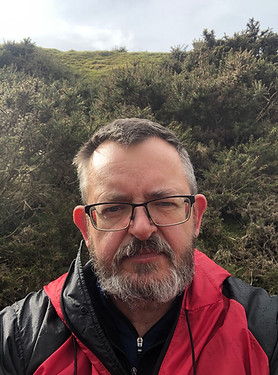
I have been very fortunate to be able to spend much of my spare time out of doors in the Countryside. Born in Manchester and raised in Cheadle Hulme, Cheshire. In my Primary School years I spent many hours catching butterflies and frogs on an old Second World War "Maintenance Unit" site, this fueled my interest in Natural History. After joining my local Grammar School I joined the Mountain Walking Society and my Biology Teacher had an interest in Ornithology, these two resulted in me making many trips around Manchester, the Yorkshire Dales, North Wales and the Lake District at the weekends. I was now hooked on being outdoors.
Roll forward to my Degree years, I studied Applied Biology at Hatfield Polytechnic (later to become the University of Hertfordshire). For my Honours Degree I majored in Ecology, Crop Protection and Microbiology. The course took me on many field trips to Devon and the Lake District as well as the Polytechnic Field Station at Bayfordbury House, Ware Hertfordshire. I graduated with an Honours Degree.
After I graduated from Hatfield I moved to Reading, Berkshire in 1980 and spent 5 years most Sundays with the Berkshire Conservation Volunteers. This took me to many nature reserves undertaking practical conservation work, otherwise known as coppicing, tree felling and scrub bashing. After moving house I joined the Theale Area Bird Conservation Group, dedicated to improving the gravel pits around the M4 to the South of Reading. Again I was a regular participator, working most Saturday mornings.
Highlights of this time was the creation of many reedbeds around the gravel pits, building a Sand Martin Nesting wall out of concrete block work and participating in many Spring breeding Warbler and Nightingale surveys. The gravel pit complex having some 65 Nightingale breeding territories at its peak in the early 2,000s making it a significantly important site in the UK for breeding Nightingales. Sadly as the scrub around the gravel pits has matured the numbers of breeding Nightingales has reduced considerably.
I have been a long standing member of both the RSPB and my local naturalist trust, the Buckinghamshire, Berkshire and Oxfordshire Wildlife Trust, "BBOWT". I have also been a member of my local ornithological club, The Berkshire Ornithological Club, "BOC" for over 30 years. I stood as the Club Secretary for several years, during which time I steered the Club through a name change from the Reading Ornithological Club to the BOC to reflect the County wide membership rather than residents of Reading.
My Photographic Journey
The Film Camera Phase
My introduction to nature photography started when I was aged 12 in 1969 when I was given my first camera, a Zenith B film camera, Jupiter 11 135mm lens and Euro Western hand held light meter. Early forays were made to a road lay bye near Tatton Park in Cheshire where locals had nailed Woodbine tobacco tins to the fence posts. A very early form of bird feeder.. As the bug for photographing birds hit my next camera set up was a Pentax ME and Soligor 400mm F5.6 lens and Telemore 5 element 2x teleconverter. I made a steadying rifle stock out of old wood and a pistol release grip from plans in an Amateur Photography magazine. Film used at the time was Agfa 64 ASA 36 frame slide film. My first real tripod was a Benbo (Bent Bolt) and a generic ball head, setting it up was like wrestling with an Octopus, but had the advantage that it would go down to ground level for flower photography. This early equipment served me well for some 15 years.
My next progression was to buy a manual focus Pentax 500mm F4.5 lens and then a series of more advanced Pentax bodies and matching 1.4 x and 2x "long nose" teleconverters. Fujifilm had introduced their 200ASA slide film which became the new standard, the equivalent of ISO 200 in modern DSLR terms.
My next progression was out of frustration, Pentax did not release a long telephoto autofocus lens that I could afford, so after some 20 years of faithfully using Pentax equipment I made the leap across to Canon, this was around the year 2000.
Starting with an EOS 5 film camera and EOS 100-400 mm lens my subject keeper rate improved. I then went through a series of film bodies over the ensuing 5 years and acquired a second hand 500mm F4.5 lens and matching 1.4 and 2x teleconverters. My final film camera was a Canon 1V which could achieve a heady 10 frames per second, which soon chomped through 36 exposure film.
In 2003 time I attended a nature photography trip run by Guy Edwardes to Texel island in the Netherlands where he taught me the concept of "pushing" film by under exposing images by 1 stop and telling the film developing company to adjust the film processing to adjust for the under exposure setting. This enabled shooting at a fabulous ASA 400 with no loss of grain structure. This trip also opened my eyes to the new world of Digital Photography being used by other attendees and the major advantages that came with it. Principally not being restricted by 36 exposures before having to stop and change film canisters and being able to review the days shooting in the evening without having to send your film off for development. A real game changer.
The Digital Camera Phase
My first foray into Digital Photography came with the Canon 1D still with the 500mm F4.5 lens and I eventually graduated onto a Canon 1DsII. The problem with these professional cameras and lenses is the size and weight and need for a very sturdy tripod and ball head system. It is very tiring lugging the equipment around, but on the flip side keeps you really fit!
After a few years I started to take note of the Olympus mirrorless 4/3rds system which promised a lighter package of more compact bodies and lenses. My first camera was the Olympus E500 and my first nature photography lens a second hand manual focus Nikon 300mm F2.8 lens, adapter and teleconverters. This lighter setup was an eye opener and I soon swapped the Nikon lens for the Olympus 50-200mm lens for its autofocus abilities, and being the equivalent to the canon 100-400mm lens. As Olympus introduced more advance digital bodies I progressed through the system to eventually acquiring second hand 150mm F2 ("Little Tuna") and 300mm F2.8 ("Big Tuna) Professional grade lenses.
Olympus then developed the Micro 4/3rds concept further reducing the size of their digital camera bodies and lenses. I acquired a second hand 300mm F4 lens and matching teleconverters with an OM D 1 Mk I. This was a huge step up in technical advancement, the camera autofocus matched with the 300mm lens was blindingly fast, the in body image stabilisation meant using a tripod became unnecessary and the equipment size was tiny compared to anything I had used before, meaning I could take the system out with me on my daily dog walking trips.
Olympus further developed their camera bodies introducing several innovative technologies, Subject Detection, and the pioneering "Pro Capture" function (now widely copied under a variety of names by other camera manufacturers) which utilises the camera's video recording function to continuously record images to the memory buffer for a set number of images before the shutter button is fully depressed, effectively a time travel function. You can now react half a second after an event and capture the actual event such as a bird taking off from a perch. Matched with improved autofocus systems and refined their image stabilisation systems to work both in camera and "in lens" to give image stabilisation of lenses with very long effective focal lengths without worrying about camera shake.
They developed, what has became the gold standard in wildlife photography lenses, the 150-400mm lens with inbuilt 1.25 teleconverter. This lens gives an equivalent "Field of View" of a 300-800mm lens rising to 1,000mm in "Full frame" ie 35mm film camera format with an incredible 8 stops of stabilisation, enabling you to shoot at an equivalent of 20x magnification at shutter speeds as low as 1/30th of a second and still get incredibly sharp pictures. Something totally unheard of some 5 years ago before the lens was announced. Olympus eventually sold its camera division to a new company, Olympus Systems.
As I approach my 70th year on this planet I can look back with some amusement on just how far technology has improved making both photography and bird watching easier. When I was 12 I had a basic film camera short telephoto lens and hand held light metre to capture images. I had a basic pair of 7x 50 Noctovid (Zeiss copy) binoculars that were heavy and not very portable. The concept of buying equipment on credit was a distant dream, everything was bought by saving up monies.
Now we have Thermal imaging monoculars to pick out birds in scrub and reed beds, Camera equipment that can record 100 frames per second, image stabilisation making tripods redundant and telephoto zoom lenses that can achieve up to 80 times magnification of subjects. Who knows what advances will be made in the next decade.
My current equipment line up comprises;
Camera Bodies;
OM Systems OM 1 D Mk I and MkII
Panasonic Lumix G9 II,
Olympus Lenses;
150-400mm F4.5 Pro
MC14 (1.4x teleconverter) and MC20 (2x teleconverter)
40-150mm F2.8 Pro
12-45mm F4 Pro Lens
Tripods, Heads and Beanbags
Gitzo CF Mountaineer 1, 2 and 3 series
Wimberley Gimbal mkII
Gitzo Tripod 75mm ball leveller
Benro Lightweight folding Gimbal head
RRS Ballhead
Neewar Tripod Levellers
3 Legged Thing Monopod and foot
Generic Hide Clamp
Simon Earley designed bean bag
Binoculars, Telescope and Thermal Imager
Swarovski Habict 10x40 binoculars
Leica 60mm Angled spotting scope with 20x60 eyepiece
Pulsar Helion Monoscope Thermal Imager